
Welding Performance Assessment at Scale
Vision AI checkoffs for weld schools and fabrication programs—evaluate technique, positions, and safety with repeatable rubrics
Vision AI checkoffs for weld schools and fabrication programs—evaluate technique, positions, and safety with repeatable rubrics
Capture arc starts, travel speed, and joint completion on video. Align rubrics to NCCER welding performance objectives; encode OSHA-aligned PPE, ventilation, fire watch, and hot-work steps as scored criteria—so every student receives consistent feedback whether the lab runs 8 or 80 welders.
Monitor competency trends by process, position, and section to guide equipment investments and curriculum updates.
Reduce subjective variance between instructors while preserving final approval on weld quality and code interpretation.
Encode OSHA-aligned ventilation, PPE, and hot-work controls into rubrics alongside NCCER skill criteria—documentation that reinforces safe shop habits.
See exactly which criteria need work before the next plate—ideal for high-demand welding programs.
Share performance evidence aligned to common weld tests and workplace expectations.
Report measurable skill gains with timestamped artifacts suitable for grant and WIOA reporting.
Automate hands-on skills assessment with timestamped evidence, competency mapping, and reporting—aligned to program standards and employer expectations.
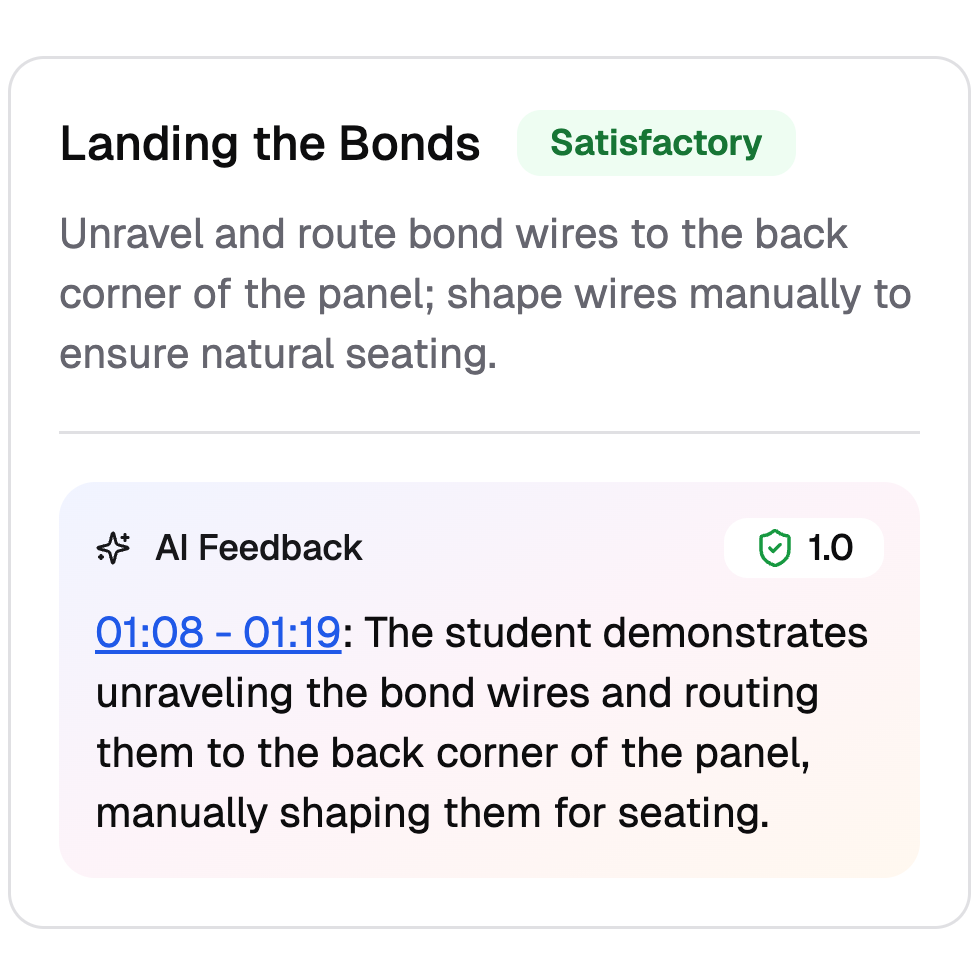
Students record their performance on video and AI scores skills against your rubrics—consistent, objective checkoffs with timestamped feedback across electrical, welding, HVAC, automotive, and other trades programs. Map criteria to NCCER performance objectives and OSHA-aligned safety steps; human-in-the-loop (HITL) keeps instructors in control.
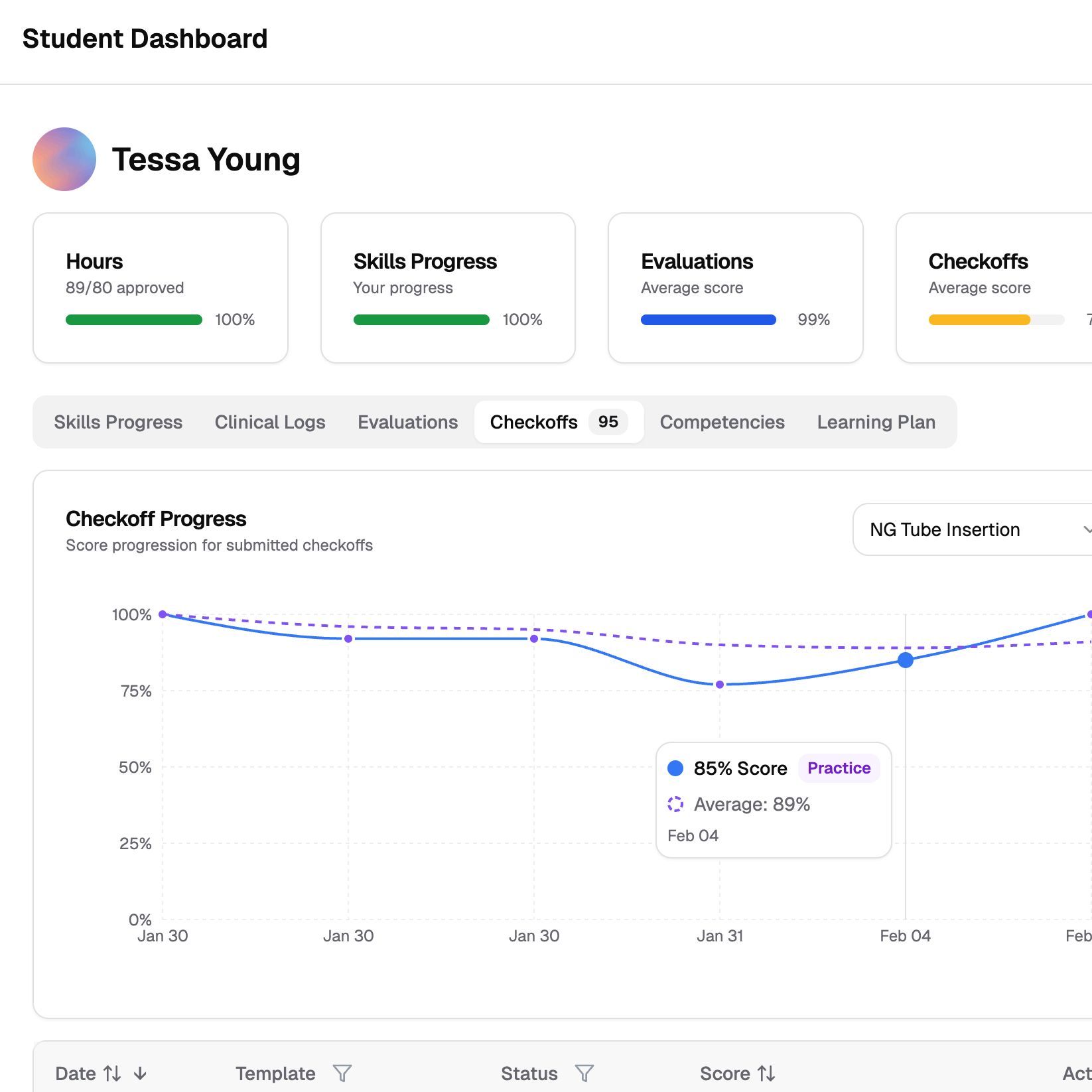
Create formative and summative assessments with rubric-aligned scoring to measure progression over time and verify competency outcomes with consistency. This leads to increased student confidence and measurable competency lift.
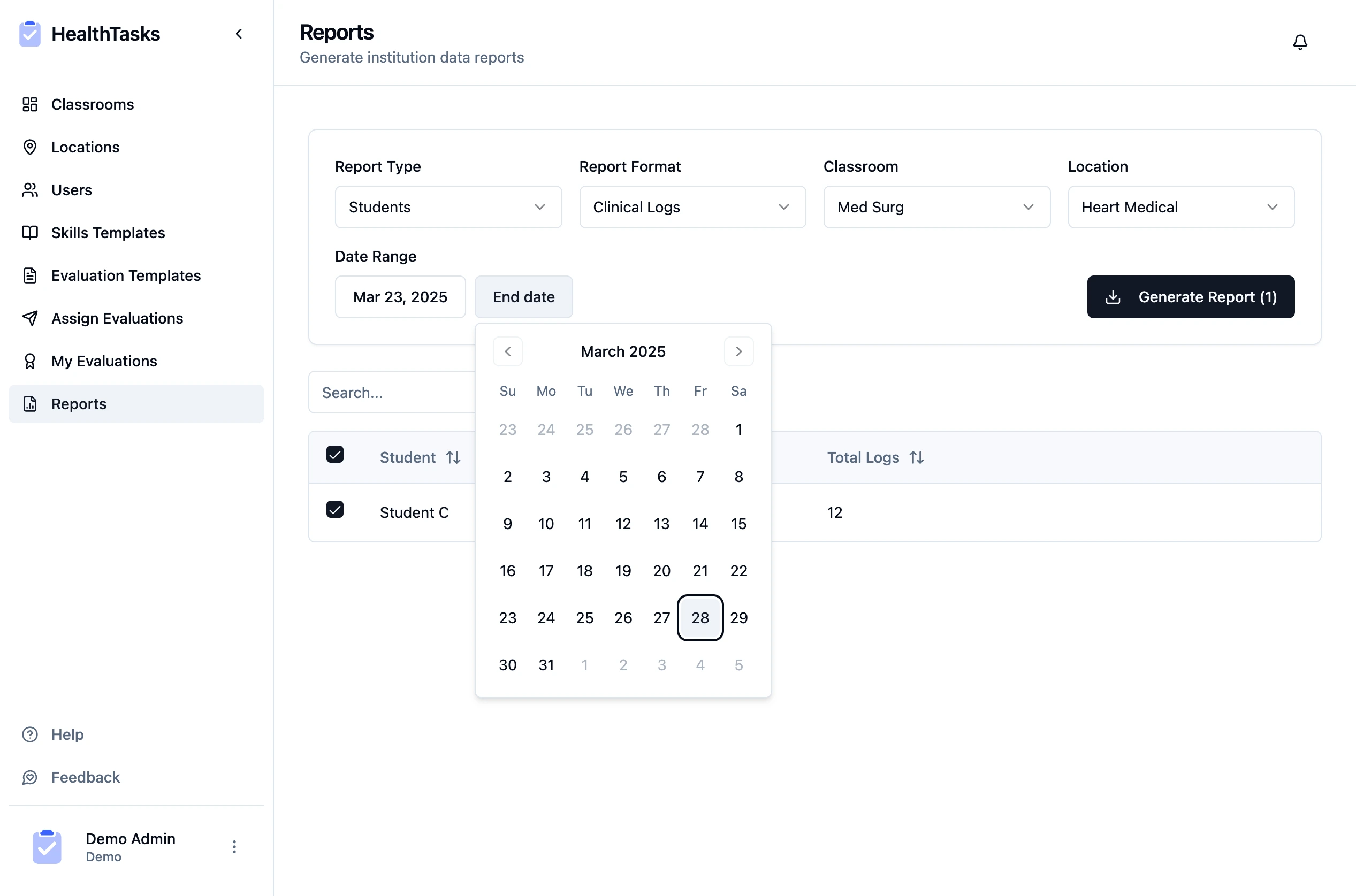
Generate in-depth, customized reports to extract the precise data insights you require. Our flexible reporting tool allows you to select specific data points and apply filters, enabling you to analyze student progress, evaluation results, and program effectiveness with precision.
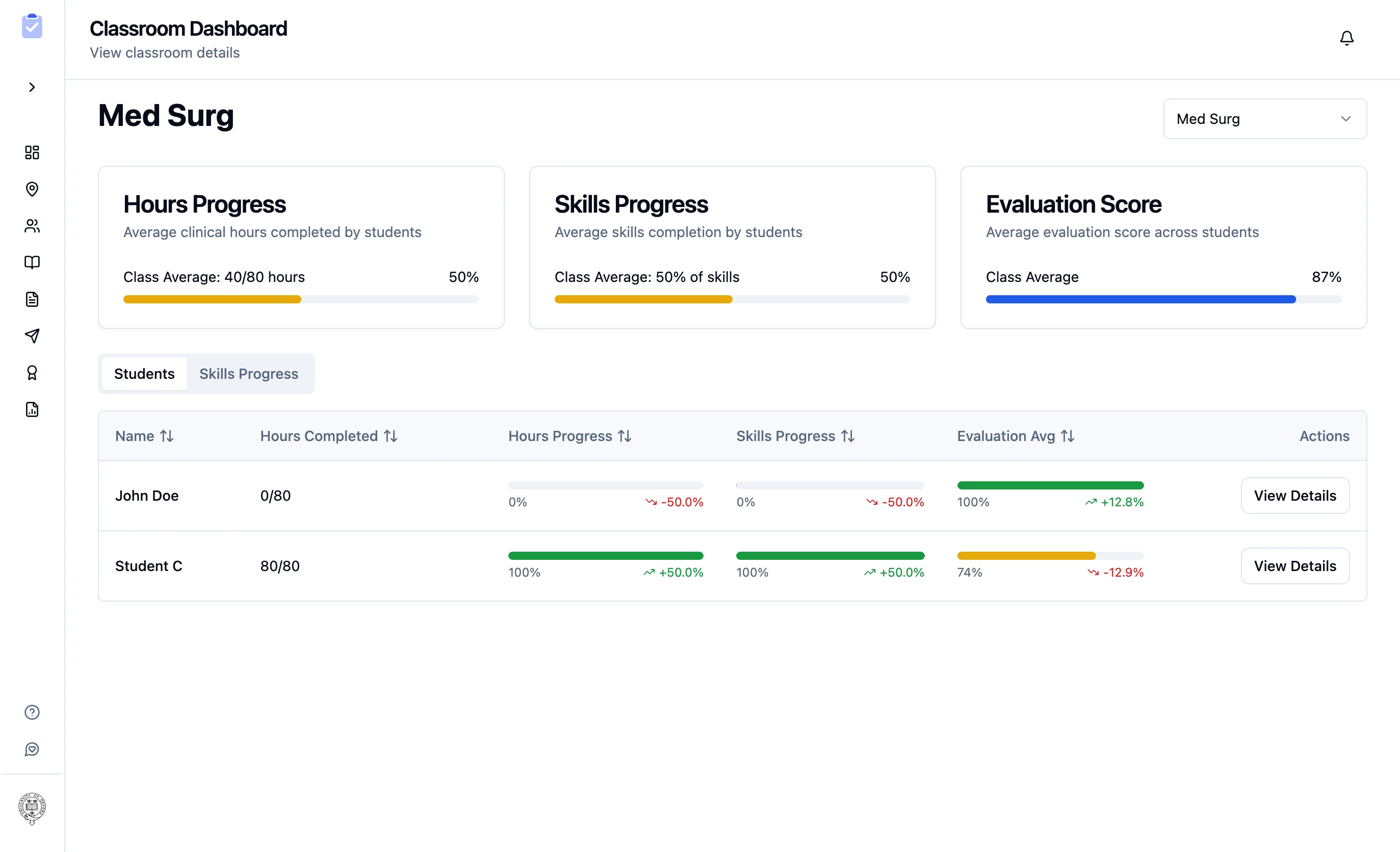
Gain instant insights into classroom and student progress with our user-friendly dashboards. Visualize cohort and individual performance against learning goals, enabling educators to identify trends, pinpoint areas of improvement, and provide targeted support.
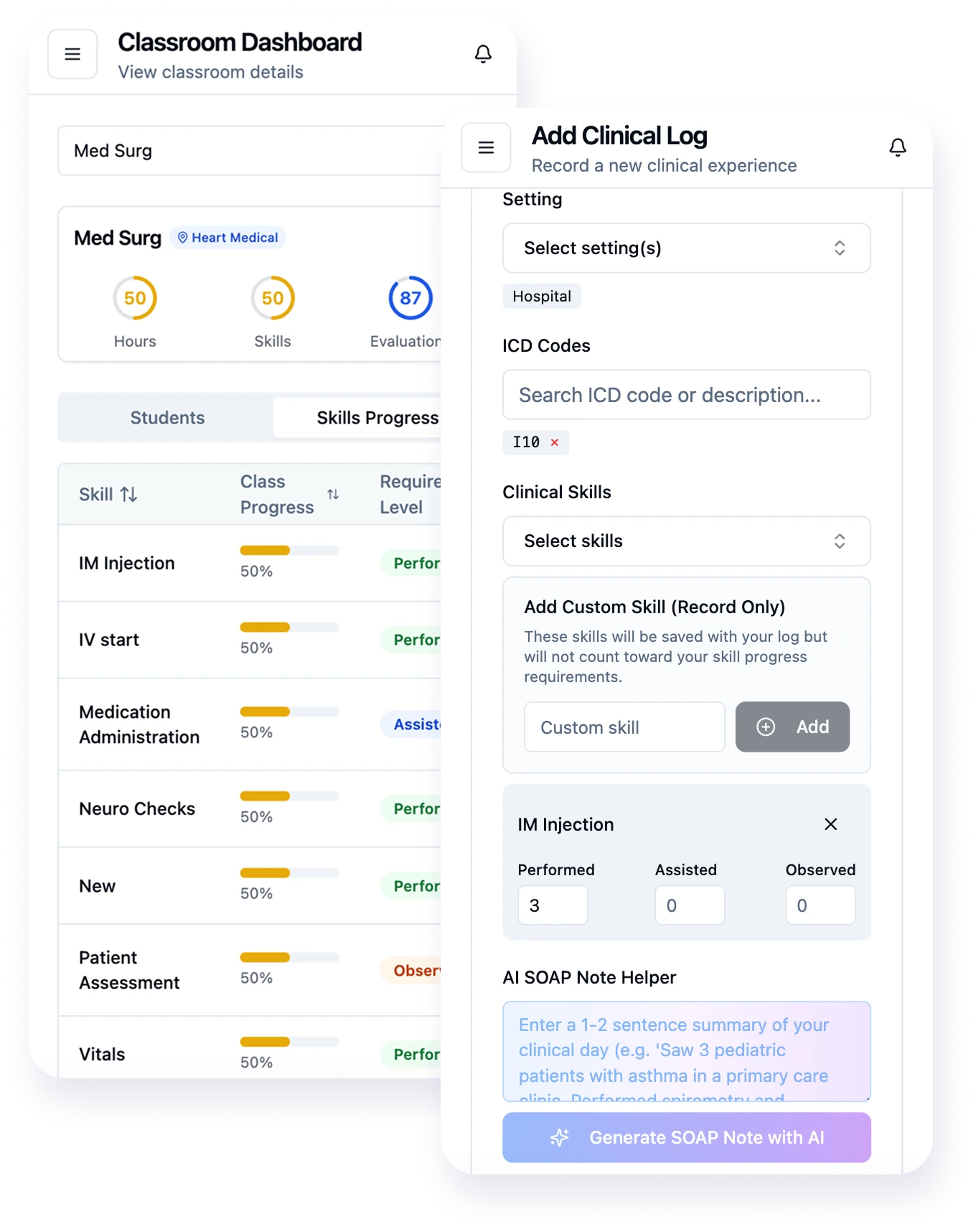
Students can log their skills in real time using our mobile progressive web app. Our platform provides the same great experience across all devices, is always up to date, and doesn't require any app store downloads.
Slide to see volume pricing for student seats.
Automated trades competency assessment
Per student per year
Standalone module
| Feature | Vision |
|---|---|
| AI Self-Study Drafting | — |
| Systematic Evaluation Plan (SEP) | — |
| Research, Draft & Audit Agents | — |
| Document corpus search with citations | — |
| Unlimited admin users | — |
| Pro AI credits ($200/mo included) | — |
| AI SOAP Note Helper | — |
| AI Log Grading Assistant | — |
| AI Scribe | — |
| Clinical Logs | — |
| Hours Tracking | — |
| Skills Progress Tracking | — |
| Customizable Evaluations | — |
| Student Schedules | — |
| Location Verification | — |
| Compliance Dashboard | — |
| Customizable Reports | |
| REST API | |
| Vision AI Skills Checkoffs | |
| Automated Grading, Timestamps, & Feedback | |
| Formative & Summative Assessments | |
| Secure Video Evidence Storage | |
| AI Competency Mapping | |
| AI Skill Rubrics | |
| HealthTasks Agents | — |
| AI Template Generation | — |
| AI Curriculum Mapping | — |
| AI Personalized Learning Plans | — |
| AI Compliance Verification | — |
| AI Insight Reports | — |
| Unified Data with Canvas Import & Grade Passback | — |
| Enterprise Add-on — $5,000/year | |
| SSO (Single Sign-On) | |
| SCIM User Provisioning |
Join technical colleges and trades schools using AI-assisted skills checkoffs for consistent grading, audit-ready records, and stronger employer outcomes.